You're at the park. Your dog is having the time of their life. Then you call them. Nothing. Your dog has discovered the muddiest puddle known to mankind and you no longer exist. You've arrived at panic station alpha.
Here's the truth: recall isn't about having a "good dog." It's about clear communication, the right tools, and consistent habits. This guide gives you the actual process.
Why recall is the hardest of the core commands to master
- Most dogs know recall means playtime ends. You need to convince them otherwise.
- You need it most when your dog is least likely to listen. A sighthound with tunnel vision. A scent hound locked onto week-old gorgonzola.
- It combines behaviourism and training. Your dog needs to know when to listen AND decide that returning is worth it.
- It takes massive repetition. If there are 50 places you might do recall and your dog has a 50% return rate, this could take 50-100 walks.
- People stop practising too early. A couple successful recalls at home doesn't mean your dog will listen forever.
Why recall matters
Controversial opinion: recall is the most important core command. It's the only command that happens in high stakes situations. If your dog doesn't come when called near a road or wildlife? That's dangerous.
Bomb-proof recall gives you confidence that your dog will come back. It prevents problems, chasing wildlife, running toward distractions, ignoring instructions.
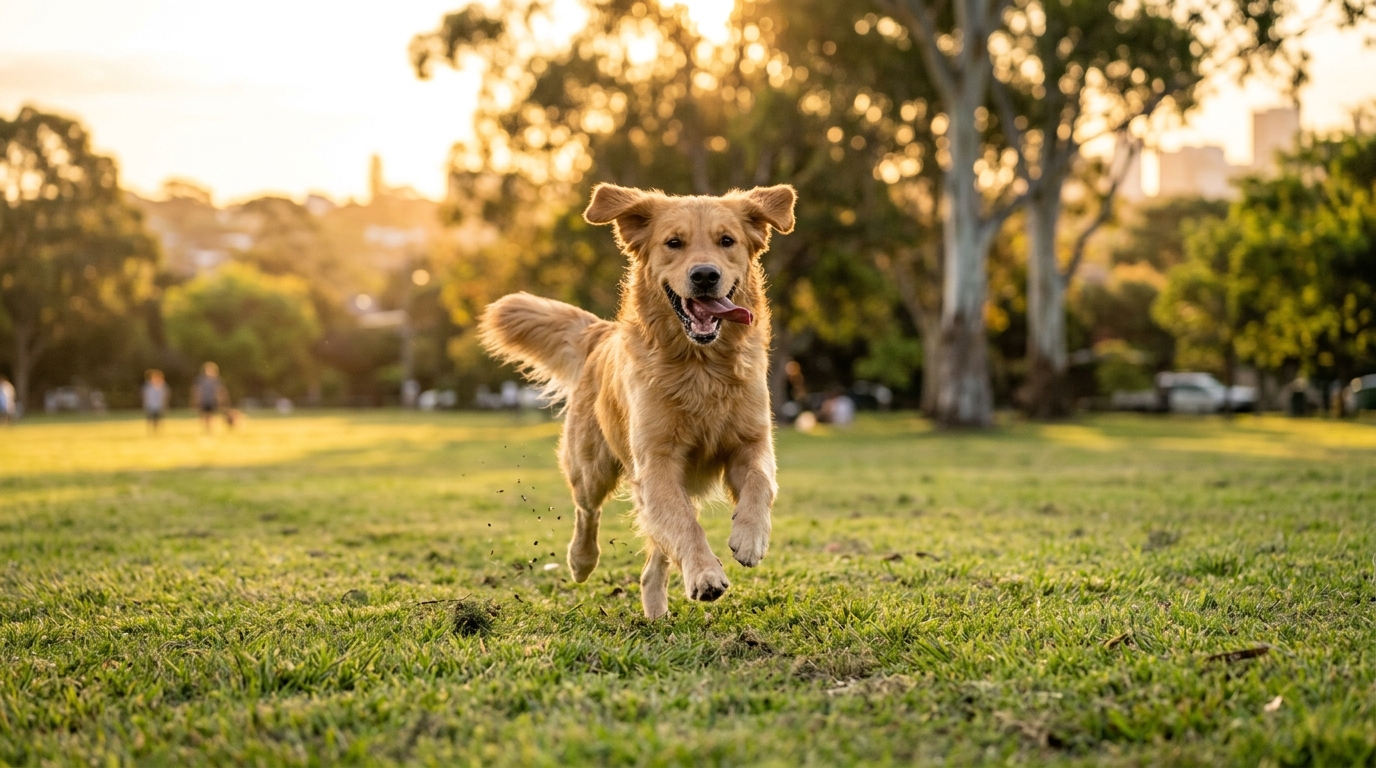
It's about progress, not perfection
Recall training is mentally intensive. For puppies, only do 2-4 proper recalls per training session. For adult dogs, decide how big you want your dog's world to be and always use a long line to practise.
Set realistic expectations. Reliable recall indoors, with no distractions, usually takes 2 to 4 weeks. Getting it to hold at a busy park, around other dogs, takes 3 to 6 months. Anyone promising faster than that is skipping steps.
Create your recall checklist
- Short line: 50cm-1 metre rope with a clip, for indoor practice.
- Long line: A 10 metre long line in climbing-weight rope, clipped to a harness, never a collar. A hard jerk on a collar at speed can injure your dog's neck. A harness spreads the pressure safely.
- Top shelf treats: Cheese, chicken, extra special schmackos AND regular kibble
- Items your dog likes: Ball, squeaky toy, anything that makes them stop and think
- Pre-requisite: Master calm walking first. If your dog can't walk calmly beside you, this is too advanced.
Step 1: make the plan. Step 2: do the plan
You need two different commands:
- Recall command ("Come here [Dog's Name]") = come directly to me
- Direction command ("this way") = we're going this direction
Big things most owners don't know:
- Say the recall command once. Not three times. A dog that hears it repeated learns it has a few chances before anything's actually expected of it.
- Practise at home first, using the exact same recall command you'll use outside.
- Recall shouldn't always mean the end. Take the collar gently, reward, then release straight away, don't hold on.
Top Tip: Recall training is all about QUALITY. Get 3-4 high quality attempts and you're done.
The process
- Attach the long line to a harness, not a collar. Leave the other end on the floor (or stand on it if your dog tends to bolt).
- Make sure your dog knows you have treats and toys.
- Let your dog burn off initial energy.
- Say your recall command once, with energy. High pitched voice, step BACK AWAY from your dog.
- If they come FIRST TIME: Top level rewards, immediately. Food, cuddles, whatever ranks highest for that dog today. Take the collar gently, reward, then release, don't hang on.
- If they're coming but slow to close the distance: Step onto the long line as they approach rather than repeating the command. Take the collar gently once they arrive, reward, then release.
- If they ignore you completely: Walk away and wait five minutes. Don't repeat the command, don't chase, and don't reward them if they wander back on their own terms after ignoring you first, that's not a recall, that's a coincidence.
Struggling with timing rewards correctly? Our community has a complete video walkthrough where I demonstrate this process with real dogs, plus live Q&A sessions for personalised troubleshooting.
Using rewards the right way
Use the random reward rule: mix food, affection, toys, and, sometimes, nothing more than a "good dog" and a release back to play. Your dog should come back for the relationship, not because they've learned exactly what's coming.
Common error: Always making recall mean "the end." Use recall during your walk, reward, then release them to keep playing. And never call your dog over to then do something they dislike, a bath, nail clipping, being crated, being left. Walk over and collect them calmly for those instead. Every recall needs to end well, or the next one gets slower.
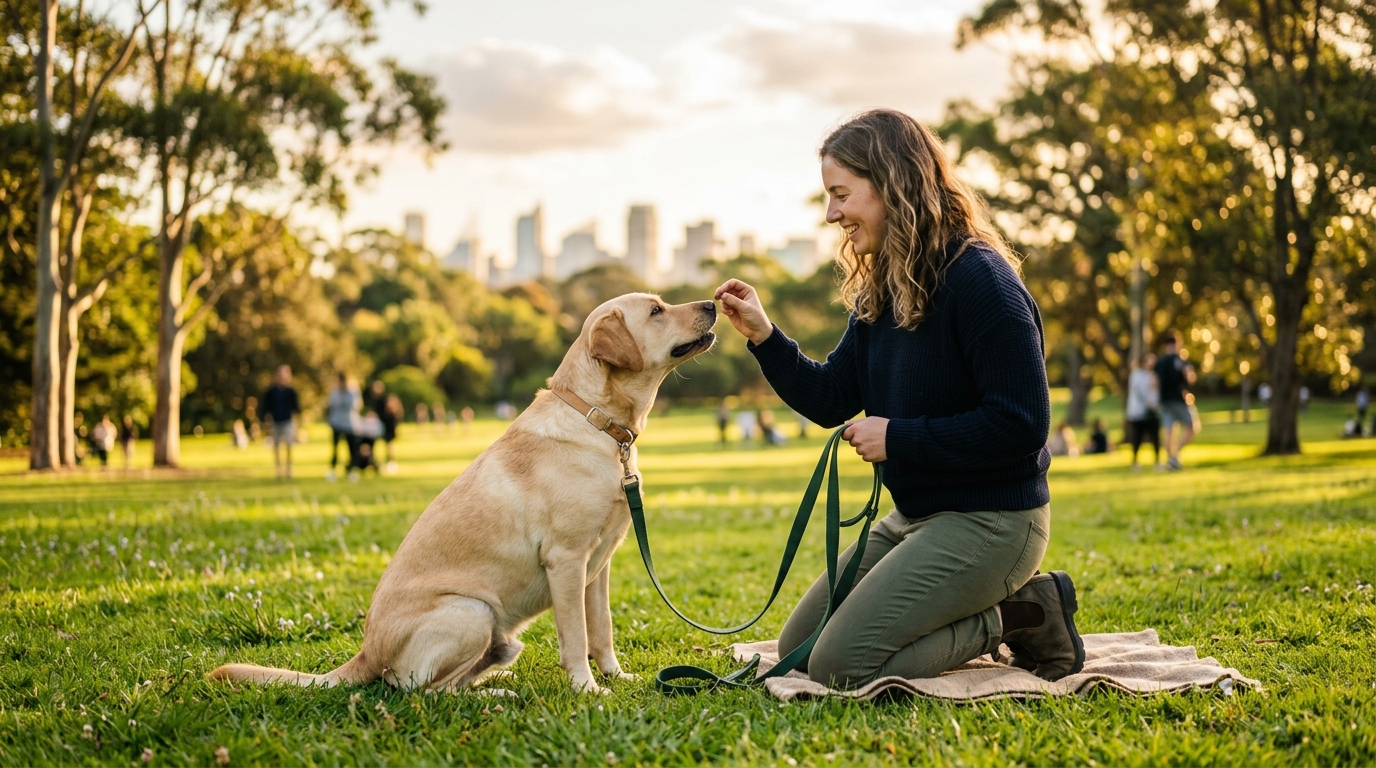
Once you've mastered the basics
Stay at the basics longer than you think you need to. When you think your dog has it nailed, practise for another week. Recall is all about repetition.
Progression 1: reduce the line length. Once recall is solid at the full 10 metres, reduce in 1 metre increments, not before. Many dogs behave differently the moment they realise there's no line attached. Some owners leave a 1 metre line clipped on permanently at the park, as long as it's touching the ground, plenty of dogs behave as though you're still holding it.
Progression 2: new environments. Control the environment when it's new. Use a shorter line somewhere familiar with low distractions, and the full 10 metres somewhere new or high-distraction, a new beach, a busy park. Start with low distractions, progress to medium, then high.
Struggling with new environments? The community has troubleshooting sessions to help you adapt techniques for your dog's personality and your actual walking locations.
Final comments
Use high-value rewards, cooked chicken or cheese. Randomise between treats, praise, and cuddles. Every time your dog comes back, take the collar gently and release straight after, don't hold on.
Use a 10 metre long line clipped to a harness, never a collar. It gives your dog freedom whilst keeping you in control.
Get ongoing support for your recall training journey
Recall training doesn't get solved in one session. Having support as you work through setbacks makes all the difference.
Inside our free Skool community, you'll get:
- Complete video walkthrough demonstrating every technique with real dogs
- Weekly live Q&A sessions for YOUR specific recall challenges
- Supportive community of owners working through the same issues
- Troubleshooting help when your dog isn't responding as expected
- Progressive training plans from basics to advanced reliability
Best part? It's completely free. No subscription. No catch.
Sydney-based? We offer in-person training sessions. Ask about availability in the community.
About The Toe Beans Co
We're a dog training company based in Sydney, Australia with clients worldwide. We use pain-free, aggression-free, punishment-free methods to help develop great behaviours in dogs.
Our Mission:
- Be the trainer you can still call when something goes wrong, for the whole of your dog's life, not just the weeks you paid for
- Raise as much money for Teenage Cancer Research as we can